Table of Contents
- How to Bail Someone Out in Utah: What You Need to Know First
- What Bail Actually Is
- The Bail Process Explained
- Step-by-Step: How to Post Bail in Utah
- Understanding the Bail Bond Release Process
- The Cost of Bail Bonds in Utah: Fees and Payment Options
- How Long Does a Bail Bond Stay Active in Utah?
- Common Mistakes to Avoid When Bailing Someone Out
- Frequently Asked Questions
Last Updated: October 3, 2026
How to Bail Someone Out in Utah: What You Need to Know First
Learning how to bail someone out in Utah starts with one fact: you can usually get someone released within hours, not days, if you move quickly and know the steps. This guide from Lucky Bail Bonds walks you through the entire process, from finding out where a person is held to posting bail and understanding what happens next. The Utah courts publish public information on how bail and release work in criminal cases, and the basic rules are simpler than most people expect during a stressful night.
When someone is arrested, they are booked into a county jail, and a judge sets bail, money or a promise that secures their release. The defendant agrees to return for every court date; if they do not, they can lose the money and face new charges. Below, we break the process into clear steps.
What Bail Actually Is
Bail is the amount of money or property a court requires to release a person from custody while their case continues. It is not a fine and it is not a punishment.
There are several forms of bail in Utah:
- Cash bail: You pay the full amount to the court.
- Surety bond: A licensed bail bondsman posts the bond for a fee.
- Property bond: You pledge real estate to cover the amount.
- Release on recognizance: The judge releases the defendant with no money, based on a written promise to appear.
The Eighth Amendment protects against excessive bail, and Utah’s criminal procedure rules govern how judges set it, weighing the charges, the defendant’s record, and the risk of flight.
The Bail Process Explained
The bail process moves through a set sequence: an arrest based on probable cause, then booking, where the jail records the person’s information, fingerprints, and photo. After booking, a judge reviews the case and sets bail, often at an initial appearance or arraignment.
Once bail is set, someone must post it, where most families get stuck, since the amount can be higher than they can pay on short notice.
Ask the jail for the booking number and the exact charges before you call anyone else. Having those two details ready cuts the time it takes to post bail significantly.
Step-by-Step: How to Post Bail in Utah

Posting bail follows three main steps: find the person, get the bail amount, then pay.
Step 1: Find Out Where They Are Being Held
Call the county jail or use its online inmate lookup with the person’s full legal name and date of birth. Ask for the booking number, charges, and bail amount. If they were arrested in a different county, confirm which jail has them before you drive anywhere, families often drive to the wrong facility.
Step 2: Get the Bail Amount and Charges
The jail can tell you the bail amount if a judge has already set it; if not, you may have to wait for an arraignment or initial appearance. Write down the charges and bail figure, a bondsman needs both. If no bail is set yet, ask when the next court session is scheduled; in many counties, initial appearances happen within 24 to 72 hours of booking.
Step 3: Choose Your Payment Method and Post Bail
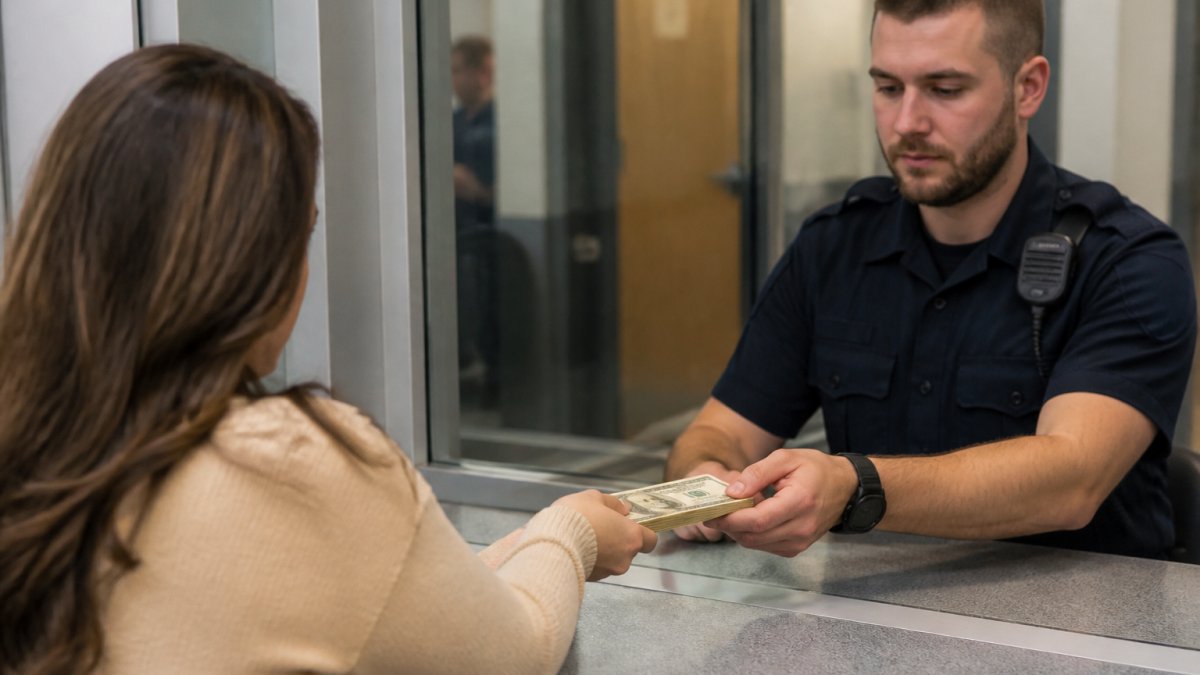
You can pay the full cash bail to the court, refundable if the defendant appears, or use a bail bondsman, who posts the full amount for a non-refundable fee. A bondsman is often the only realistic path when bail is high.
Payment methods usually include:
- Cash or cashier’s check at the jail
- Credit card, where the jail accepts it
- Remote payment through a bonding agency
Many agencies handle remote payment, so you do not have to be at the jail in person; the agency coordinates directly with the jail.
What to Bring to the Jail
If you are posting bail in person, bring these items:
- Government-issued photo ID (driver’s license, passport, or state ID)
- The defendant’s full legal name and date of birth
- The booking number
- The exact bail amount in an accepted payment form
- Cashier’s check or money order if personal checks are not accepted
- The bondsman’s contact information, if you are using one
- A pen and notepad to record the court date and any instructions
Call the jail ahead of time to confirm which payment forms they accept that day, since policies vary by facility and shift.
Preparing for a Bail Hearing
If the judge has not set bail, or the amount is too high, a bail hearing is your chance to ask for a lower amount or different release conditions. Bring proof of the defendant’s ties to the community:
- A letter from an employer confirming the job and schedule
- Proof of a stable address, such as a lease or utility bill
- Documentation of family relationships, such as a marriage certificate
- Evidence of any medical or treatment obligations
- A proposed release plan, including who will supervise the defendant
The judge weighs flight risk and public safety, and concrete documents carry more weight than verbal promises.
After the Bond Is Posted
Once the bond is posted, the jail verifies it and begins the release process, which can take a few hours depending on how busy the facility is. The defendant leaves with a court date and instructions, write that date down and set a reminder, since missing it is the fastest way to forfeit the bond.
Understanding the Bail Bond Release Process
A bail bond release moves fast once the bond is posted. Here is the typical sequence:
- You sign an indemnity agreement with the bondsman.
- You pay the premium and any required collateral.
- The bondsman posts the surety bond with the court or jail.
- The jail processes the release.
- The defendant walks out with a court date.
The indemnity agreement makes you responsible for the full bail amount if the defendant fails to appear. Read it before you sign.
The Cost of Bail Bonds in Utah: Fees and Payment Options
Understanding what you actually pay, and what you get back, is the biggest source of confusion for families posting bail. A bondsman’s fee is non-refundable, but cash bail paid directly to the court is refundable when the case ends.
How the Bond Premium Works
A licensed bail bondsman charges a premium, a percentage of the total bail amount, for posting the full bond with the court. That premium is earned when the bond is posted and is not returned when the case closes, regardless of the outcome.
Most states regulate the maximum premium a bondsman may charge. The exact figure depends on the bail amount, the charges, and the agency.
Cash Bail vs. Bond Premium: What You Get Back
- Cash bail paid to the court: Refundable. If the defendant appears at every court date and the case resolves, the court returns the full amount, usually after the case is closed and any fines or fees are settled. Expect a processing window, often several weeks, before the check arrives.
- Bond premium paid to a bondsman: Non-refundable. You are paying for a service, not depositing money. The premium stays with the agency even if the defendant is found not guilty or the charges are dropped.
- Collateral: Separate from the premium. If you pledge a car, a house, or cash as collateral, it is returned once the bond is exonerated, meaning the defendant met all court obligations. If the defendant fails to appear, the collateral can cover the forfeited bail amount.
Cash bail is a deposit you get back. A bond premium is a fee you do not. Ask any bondsman to state both numbers, the premium and any collateral requirement, in writing before you sign.
Questions to Ask Before You Commit
A reputable agency answers these without hesitation:
- What is the total premium, and is any portion refundable?
- Is a minimum fee applied to small bonds?
- Will you require collateral, and what kind?
- Are there added charges, travel, filing, or administrative fees, beyond the premium?
- What happens to my collateral if the defendant misses a court date?
- Do you offer a payment plan for the premium?
Get the answers in writing; verbal quotes are not enforceable.
Payment Methods Accepted
Most agencies and county jails accept more than one form of payment:
- Cash or cashier’s check at the jail or agency office
- Credit or debit card, where accepted
- Money order
- Remote payment through an online portal or by phone
If you are paying cash bail directly to the court, confirm accepted methods with the clerk before you arrive, some facilities do not accept personal checks, and card processing may carry a fee.
When Bail Is High: Options to Consider
If the bail amount is beyond what you can pay in cash, a bondsman is often the only realistic path, but other levers are worth knowing:
- Ask about a bail reduction. A judge can lower bail at a hearing if the defendant has strong community ties, a job, or a stable address.
- Explore a payment plan. Some agencies let you pay the premium in installments rather than a lump sum.
- Check whether the defendant qualifies for release on recognizance. If the judge grants it, no money changes hands.
The right move depends on the bail amount, the charges, and how quickly you need the person released.
How Long Does a Bail Bond Stay Active in Utah?
A bail bond stays active until the case ends, the defendant is exonerated, or the bond is forfeited.
The bond does not expire on its own after a set number of days.
If the defendant misses a court date, the judge can order forfeiture, triggering a demand for the full bail amount. The window to fix it is short, call the bondsman and the court the same day.
Never let a missed court date sit for even a day. Forfeiture moves quickly, and once it is ordered, the full bail amount can become your responsibility.
Common Mistakes to Avoid When Bailing Someone Out
Most problems come from a few repeated mistakes. Avoiding them saves money and time.
- Waiting to act. Bail is set at booking, so delays cost hours.
- Not confirming the jail. People drive to the wrong facility and lose a night.
- Skipping the paperwork. Read the indemnity agreement before signing.
- Ignoring court dates. One missed date can forfeit the bond.
- Paying without asking about fees. Get the full fee in writing first.
Here is a quick checklist for family members:
- Confirm the jail and booking number
- Get the exact charges and bail amount
- Decide between cash bail and a bondsman
- Ask about the fee, collateral, and refund policy
- Save the court date and set a reminder
- Keep the bondsman’s number handy
If you are preparing for the next hearing, gather any documents the court requests and arrive early, since a bail hearing is your chance to ask the judge to lower bail or change release conditions.
Frequently Asked Questions
How do I bail someone out fast?
Speed depends on knowing the jail, the bail amount, and having payment ready. Call the jail to confirm the person is booked and the bail amount is set, then contact a licensed bail bondsman who can post a surety bond quickly. A bondsman handles the paperwork and posts the bond so release can begin. Keep your phone on and stay reachable, because the jail or bondsman may need information or signatures before the person walks out.
What paperwork do you need to bail someone out of jail?
You will typically need a government-issued photo ID, the full legal name and booking number of the person in custody, the jail location, and the bail amount. If you use a bail bondsman, you will sign an indemnity agreement and may need to provide collateral. If you post cash bail directly with the court or jail, you will complete the court’s payment forms. Requirements vary by jail, so confirm the exact documents before you arrive.
Is it better to pay bail or use a bond?
Cash bail means paying the full amount, which is returned if the defendant appears in court. A surety bond means paying a non-refundable premium, usually a percentage of the bail, to a licensed bondsman who posts the full amount. If you cannot afford the full bail, a bond is often the practical choice. If you can pay the full amount and want it back after the case ends, cash bail may make more sense.
Are bail bond premiums refundable in Utah?
No. The premium you pay a bail bondsman is a fee for the service and is not refunded after the case closes, even if the defendant appears at every court date. This is different from cash bail, which the court returns once the case resolves and all appearances are met. Ask the bondsman to explain the fee structure and any collateral terms in writing before you sign the indemnity agreement.
Bailing someone out is stressful, and the rules do not wait for you to catch up. Lucky Bail Bonds is a local, family-owned company serving the entire state, with agents who bring over 20 years of experience to every case. We answer the phone 24 hours a day, 365 days a year, handle the paperwork, and walk you through each step so you are never guessing. Get in touch with Lucky Bail Bonds and get your loved one home.